The incident
In May 2025, a passenger service formed of a Mk4 set and hauled by a Class 67 locomotive struck a loaded agricultural trailer on a user-worked level crossing. The train was travelling at around 80 mph.
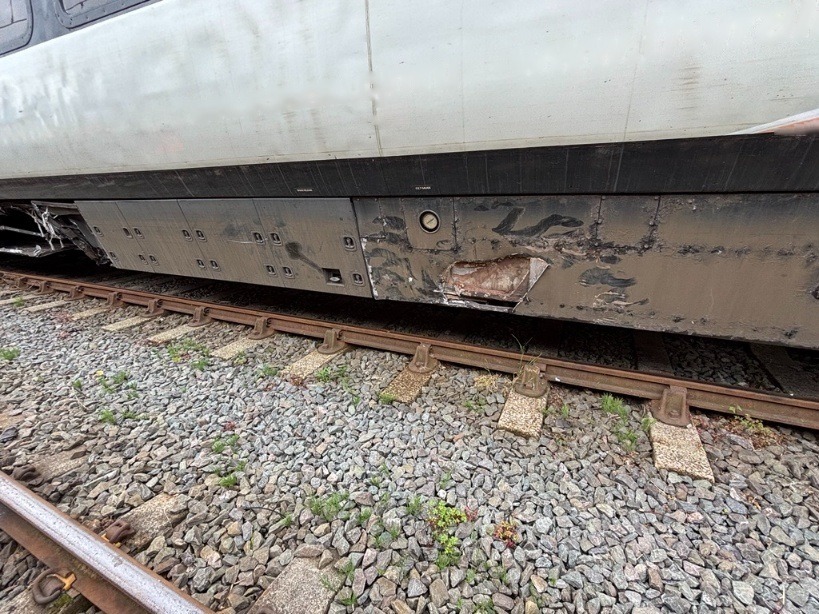
The trailer became wedged on the front of the Driving Van Trailer (DVT) and was dragged for around 500 metres before the train came to a stop under braking. The train didn't derail, but the leading DVT and several passenger coaches were badly damaged. Six passengers suffered minor injuries, and the collision also damaged track, lineside equipment and a second level crossing further along the route.
For our client, the impact went beyond the damage itself. With the set out of service, fleet capacity dropped, and the risk of long-term disruption to passengers was real.
The challenge
- Severe collision damage to the DVT and leading coaches
- Reduced fleet capacity while the set was out of service
- A rebuild needed quickly, and to full mainline standards
- An opportunity to build in reliability improvements learned from years in service
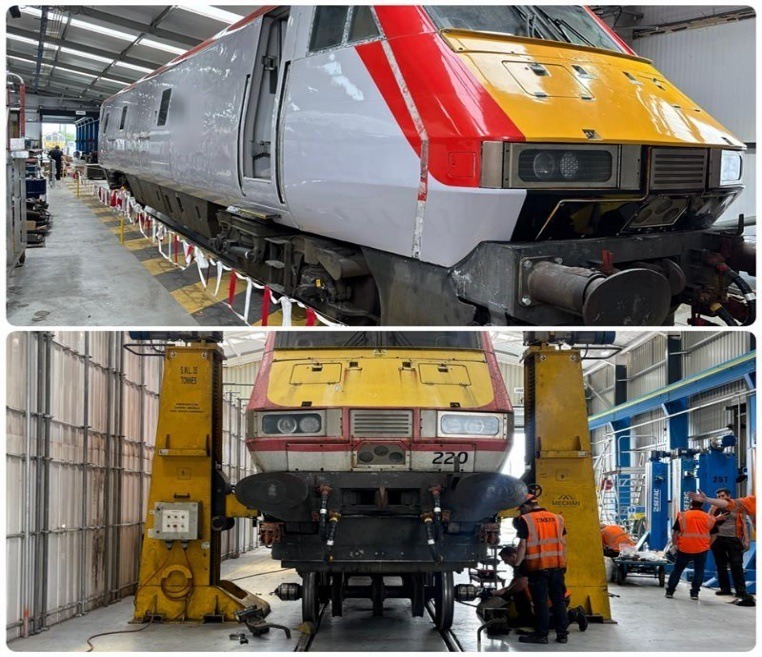
Assessing what could be saved
On Track Group was already at the depot, rebuilding a spare Mk4 set for mainline service, when the collision happened. Because our team and facilities were in place, we could reprioritise the programme immediately rather than starting from scratch.
Our engineers stripped the crash-damaged coaches and worked alongside AtkinsRéalis to assess each vehicle and decide which could be economically repaired and which could not.
The rebuild: coach substitution and mainline standards
Rather than wait for the most badly damaged vehicles to be repaired, we selected three coaches from the spare set (the DVT, a TO and a POD) to rebuild and take their place. Each was restored to full mainline standard.
Solving the unexpected: axle removal without lifting jacks
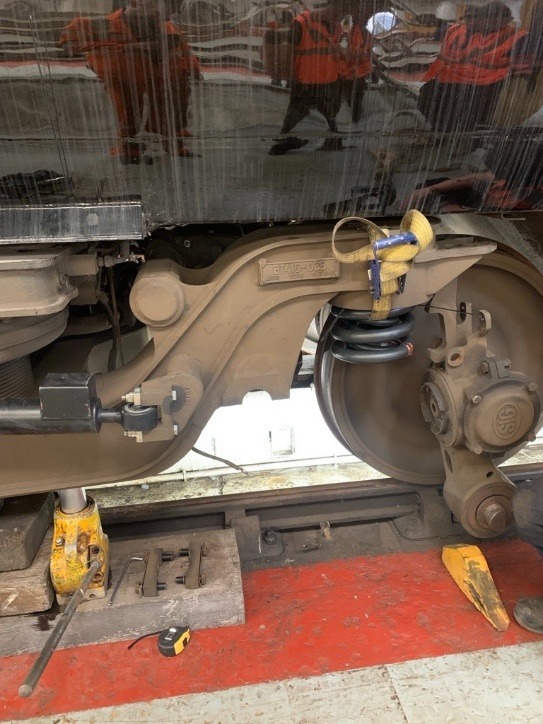
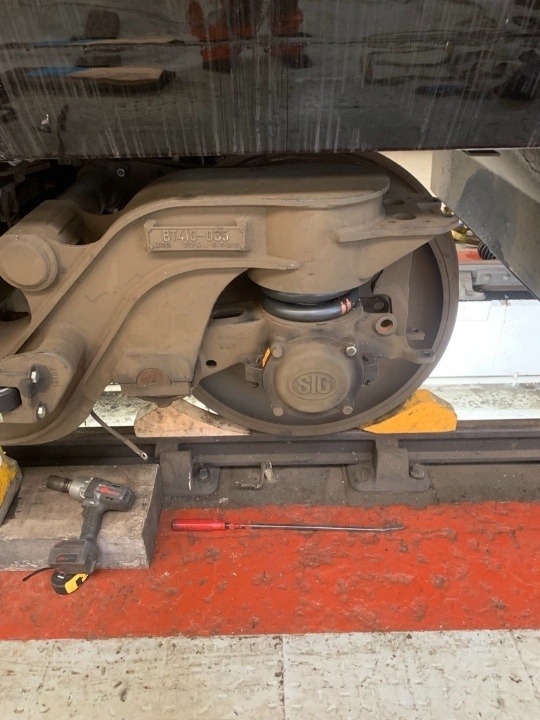
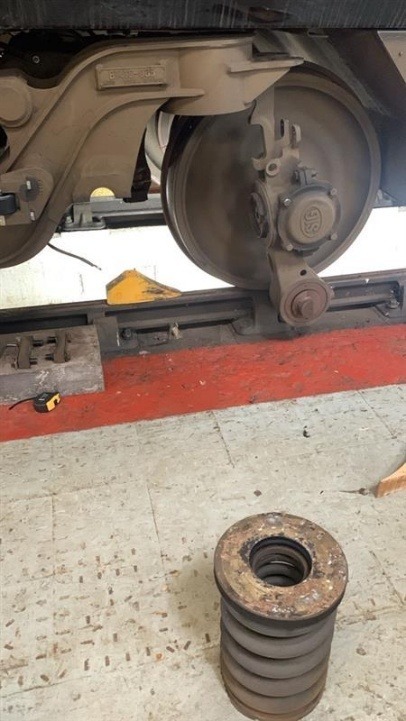
During the first acceptance exam, we found that one of the primary springs had collapsed and become coil-bound. The train was due to move to Crewe for trial runs, but couldn't leave until the spring was replaced and the primary suspension heights were confirmed to be within specification.
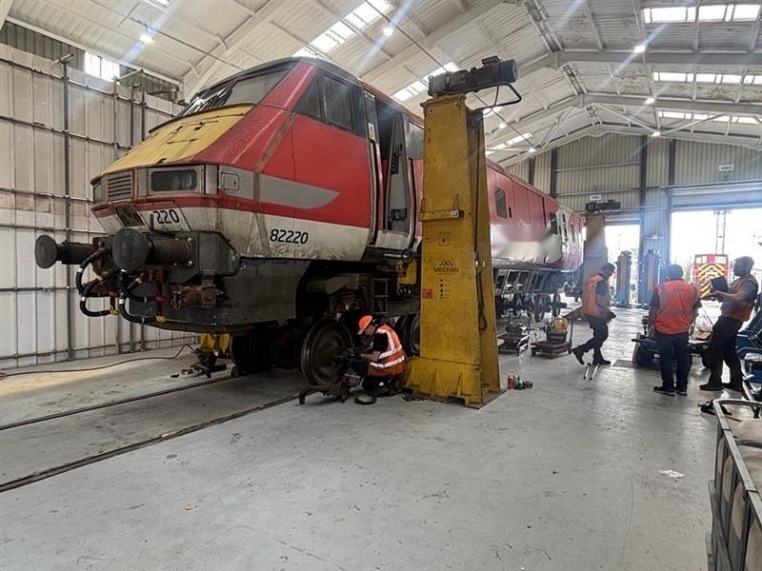
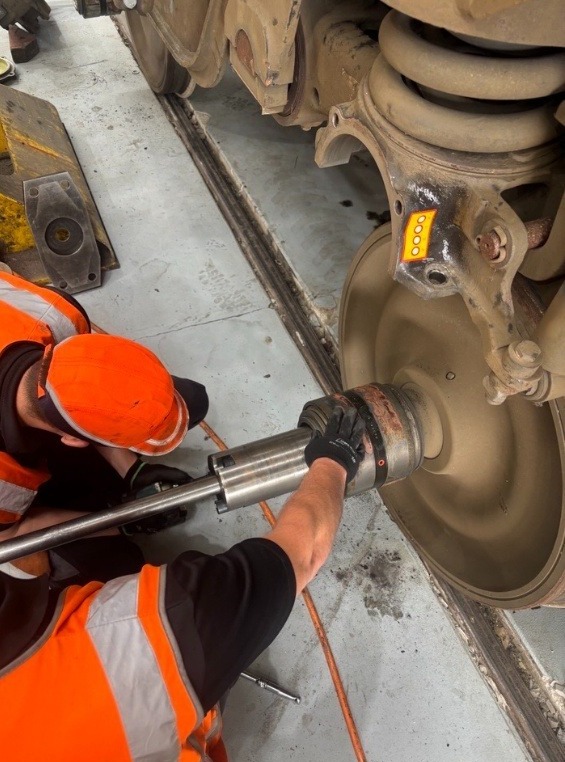
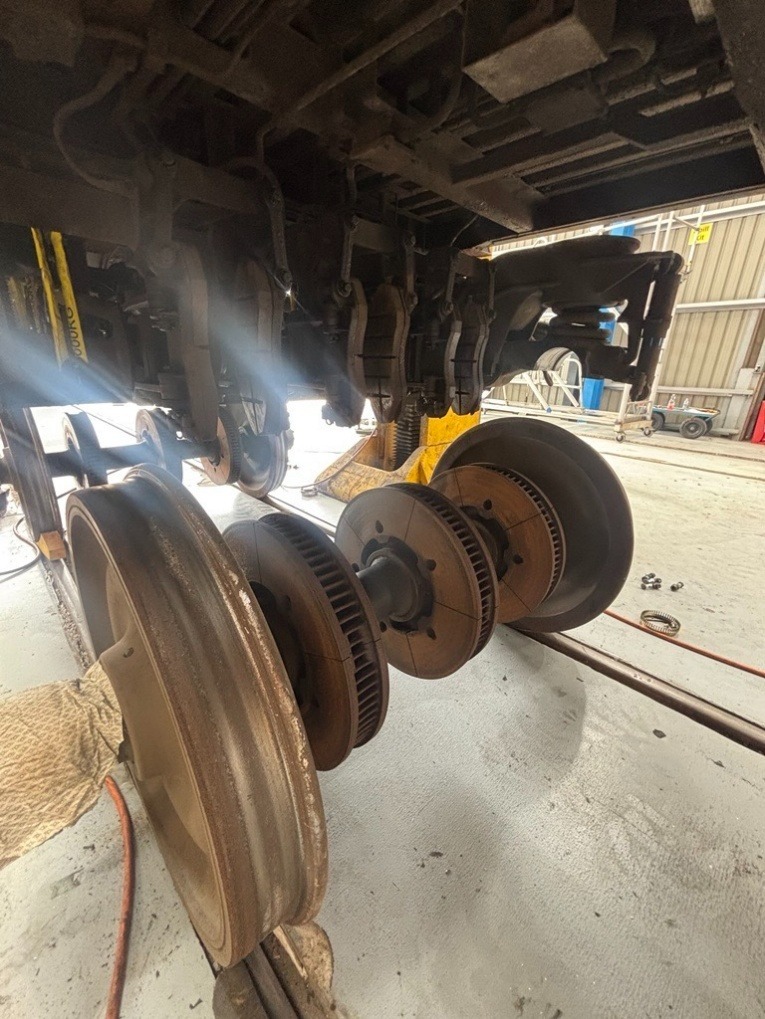
There were no lifting jacks available to raise the whole vehicle, so our team developed a safe alternative. The affected coach was split from the set, the bogie was raised using two 30-tonne Hydrolyte jacks, and the axle was partially removed so the spring could be replaced.
Before any work began, every spare part was sourced and a detailed lifting procedure was written and formally approved by the Project Engineering Manager. The spring was replaced safely, the suspension heights were verified, and the train left for its trial runs.
Reliability upgrades built in
A rebuild is a rare chance to fix the issues that have caused problems in service. Using our experience of the Mk4 fleet, we built in a range of improvements:
- Contactor replacements
- Control module upgrades
- Door set-up optimisation
- Corrosion repairs
- Bogie lifts
- Axle and bearing replacement
The result
- Rebuilt in 2.5 months: exceptionally fast for the scale of work.
- Fault-free return: the set returned to mainline service running without faults.
- Capacity restored: passenger disruption was kept to a minimum.
- Lasting benefits: the reliability improvements will benefit the wider Mk4 fleet.
What's next
With this rebuild complete, On Track is now rebuilding a second crash-damaged vehicle to expand our client's Mk4 fleet.
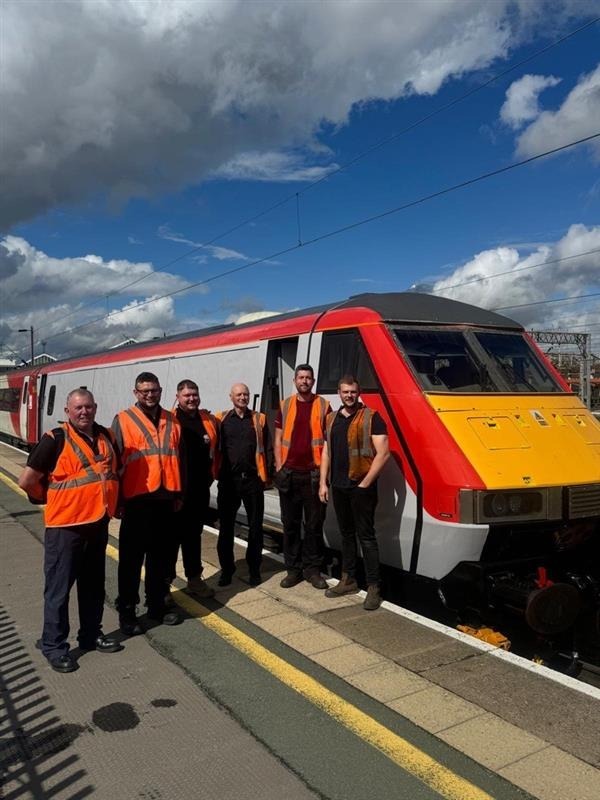
The project showed what On Track does best: mobilising quickly when the unexpected happens, combining accident recovery with long-term fleet improvement, and delivering complex rebuilds to mainline standards under tight deadlines.